Setting Your Space
Getting the most out of virtual therapy sessions

An individual’s arms, decorated with bracelets and a silver watch, can be seen holding up an iMac computer frame which, emptied of electrical components, holds several varieties of house plants. The person’s head and face is blocked by the computer, and the background is lush dark green leaves of a tree.
In the minutes before your first session (or your fiftieth!), it can be easy to underestimate how much the space around you affects what's possible inside a session. One of the ways I think about my role as your therapist is that we're building a container together to hold everything that is explored. A strong and capable container. Not just symbolically or emotionally, but physically as well. The room you have your sessions in is already part of our work, and already has an impact on your nervous system, whether we're paying attention to it or not.
And yet, this might not come up until you're five minutes away from a session, suddenly wondering:
Where am I supposed to do this?
My hope is that we can make your space work with us, not against us. Therapy is hard work, and sometimes it's hard to even show up. So let's make sure the space itself can help, and support us to the greatest capacity it can. After all, this is your familiar space, where you live and breathe — ideally a place where you can feel rooted and supported even after our hour is up, and where the benefits of our work can follow you into your day.
Privacy and quiet. Having a private space is the most important piece of online therapy. If there's a door, close it, so that what you share stays in the room, and what's happening outside stays out. We're creating a container, and we don't want any leaks. If your space tends to be noisy, noise-canceling headphones can help, though they're not a requirement. Quiet enough works, too.
Technology at eye level. Prop up your phone, tablet, or laptop so you're not holding it for the whole session. Holding a device for an hour adds tension to the body that we just don't need. Use a stand, a pillow, a stack of books — whatever works — so you can actually settle.
A place to lean back. Choose a chair with a back, or position yourself near a wall. Sometimes in our work together you may want to close your eyes, soften, or recline slightly. Having that option available is more important than it might seem — so it's worth thinking about before we begin, even if it means knowing which room you'd move to if you needed more support.

Comfort and touch. A weighted blanket, a regular blanket, a fan if it's warm. Think about what helps your body feel at ease and have it nearby. We're working with the whole nervous system in this kind of therapy, and your senses are doorways.
Scent. A candle, incense, a lavender spray — whatever you like. Scent is a quiet but powerful support for regulation, and you're welcome to bring it in. Encouraged, even.
A warm drink. Wrapping your hands around a warm mug can be an incredibly grounding act, as is the sensation of sipping on hot tea, coffee, or plain water. Alternatively, offering yourself something ice cold, or a refreshing sparkling water can be equally supportive.
A notebook. Sometimes things surface that you'll want to remember. Having something to write with and on — just within reach — lets you catch those moments without losing the thread of our work.

Pets. Welcomed, always. Your connection with your animals is a real resource — not a distraction. I'm always glad to see them join us.
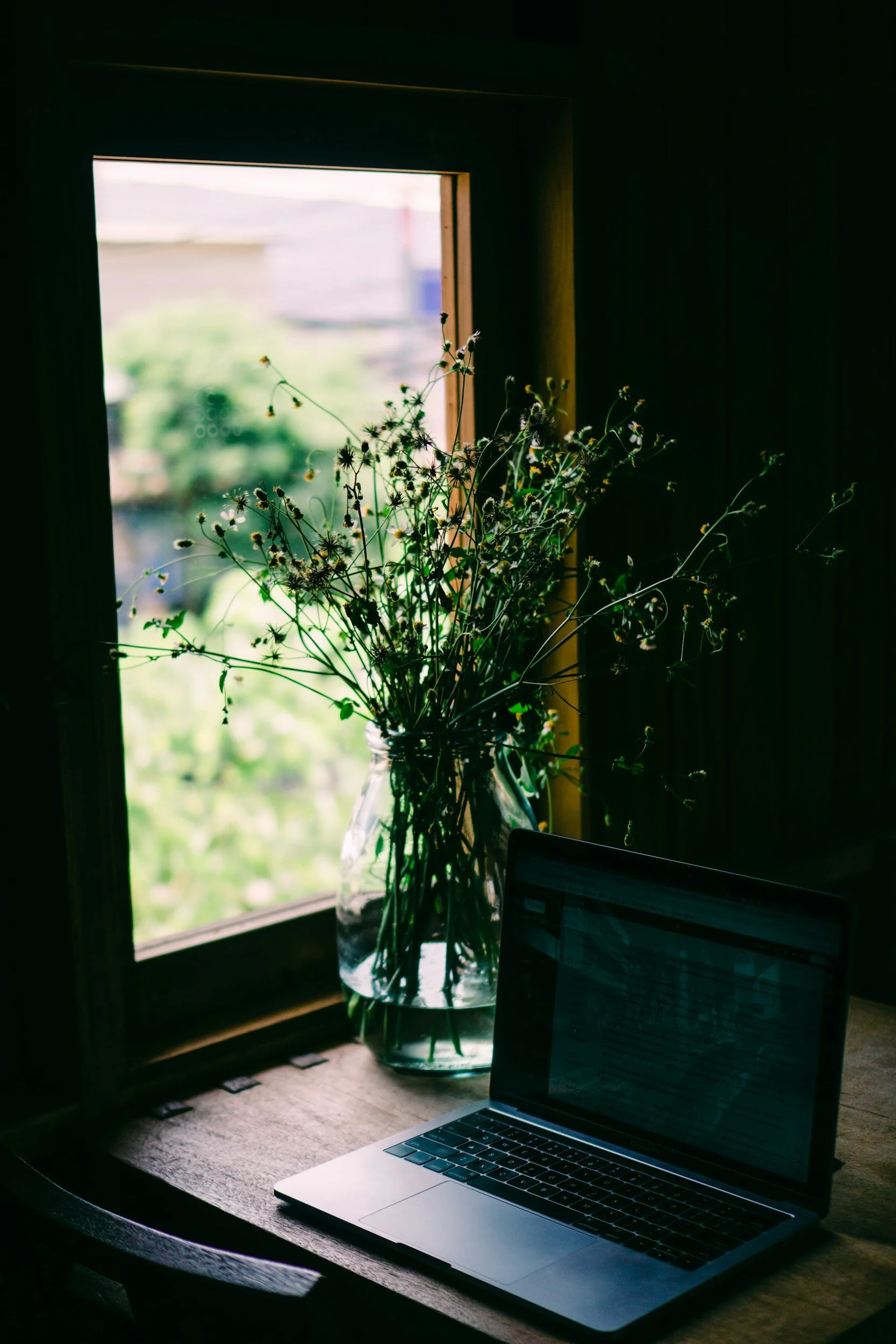
A connection to nature. If you can, sit near a window. Sunlight, a patch of sky, trees — even simple natural light is more of a resource than it might seem. If a window isn't possible, a houseplant nearby, a rock, or any other item brought in from outside, can help. These give your eyes and your nervous system somewhere to land — what I think of as a quiet anchor or resource — something outside ourselves to return or look to, when things start to feel like too much.
Comfortable clothing. Wear what you're most at ease in. We want your body to have room to be flexible, and tight or uncomfortable clothing can get in the way of that.
Arrive a few minutes early — not to troubleshoot, but to breathe. Give yourself five minutes before we begin to find your spot, settle in, and let the transition happen. You don't have to arrive ready. You just have to arrive.
And however you show up — tired, unsure, or having had a hard day — that's okay. The space sets a tone, not a requirement. You don't have to be in a particular state to begin.
Once you've found your spot, you won't have to think through all of this every time. It becomes your therapy space. And that repetition — that small ritual of arriving — is itself part of the work. It tells your system: this time matters. I'm here for this.
And if your space isn't perfect — if there's noise you can't control, or your setup is a little makeshift — that's okay too. We will adapt. That is also part of this work, and part of life. We will make it work. It will be enough. What matters most is that you're here.